CPRMV 0.4.3

Core Public Rule Management Vocabulary (CPRMV), extending the Interoperable Europe standards towards a standard for Public Rule Management

MinBZK - Dutch Ministry of Internal Affairs Standard
First public working draft

This version:
https://standaarden.open-regels.nl/standards/cprmv/0.4.3
Latest published version:
https://standaarden.open-regels.nl/standards/cprmv
Latest editor's draft:
https://standards.github.io/cprmv/
Previous version:
https://standaarden.open-regels.nl/standards/cprmv/0.4.2
Editors:
(ICTU)
(ICTU)
Authors:
Bas Kaptijn
Marco Brattinga
Steven Gort
Andre van Brussel
Participate:
Gitlab
All issues
File an issue
Commit history
Pull requests

This document is also available in these non-normative format: pdf


Abstract

This specification defines the Core Public Rule Management Vocabulary (CPRMV). The Core Public Rule Management Vocabulary (CPRMV) is the basis for a standard for public rule management for which the regels.overheid.nl is the (Dutch) portal for all related knowledge and tooling for now.

Status of This Document

This is a draft that could be altered, removed or replaced by other documents. It is not a recommendation approved by TO.

1. Non normative section

This section is non-normative.

1.1 Introduction: Managing rules is part of service delivery

Transparancy and accountability are two core values of public administration. As such, the Core Public Service Vocabulary Application ProPSV-AP) contains the notion of public services (cpsv:PublicService) following rules (cpsv:Rule) that implement legal resources (eli:LegalResource). Detailed modelling of rules is out of scope of Core Public Service Vocabulary Application ProPSV-AP) as is stated in the documentation regarding the cpsv:Rule concept. Core Public Service Vocabulary Application ProPSV-AP) also doesn’t describe how those rules and legal resources are created in the first place.

A key notion of the rule of law is that the creation of rules is itself subject to the law. As such, the creation of legal resources and rules can be considered (part of) a public service being delivered. From a transparency and accountability perspective, you then even can consider the creation of any artefact needed to transform law into executable public services to be (part of) a public service, for example (but not limited to): the creation of legislation, policy documents, instructions, explanations, data models, process models, rule models, system design, etc. Even the decisions that are output of a public service that follows the rules can be seen as such artefacts.

Such artefacts are not just information, but contain the output of a public service, that often has the status of being denoted as what has been decided upon, what is specified, and what (other) public services will follow from that moment. In the legal domain this is what is called "positive law" (not as in positive versus negative but as in that what has been posited) which is subject to the so called "rule of recognition". All these specification artefacts, not only the ones in the legal domain, then can be seen as sets of rules. A rule being knowledge that is published as what has been decided upon and other rules can get and typically are based on, entirely independent of specific domains and disciplines.

To maximally support transparency, collaboration and efficiency, feeding back into quality of rules and the services that follow them, this knowledge should be published in public and findable for whomever it may concern as far it is not traceable to personal information. Almost always, in the end this means any person must be able to find this information while in practice a lot of it is not. This information not only includes the specification artefacts themselves but also it's provenance metadata. As part of what service of what organisation such specification artefacts are created as the output of what kind of activity following what kind of method, standards and tools, is all part of this information which is currently often hard to find and get an overview of while necessary for effective support processes and trust.

For this, first of all the Core Public Rule Management Vocabulary (CPRMV) introduces the concept of a Ruleset, being a set of (nested) Rule's. A Ruleset bundles one or more specification artefacts, as the output of a public service and the result of a deliberation process within the context of the delivery of a service. A ruleset describes these specification artefacts as sets of Rule's, exactly as how they are created by the public service, and puts these into the RuleSet which can be seen as an envelope. As such, it abstracts from the structure, format and meaning of these specification artefacts which heavily depend on the great number of instruments, being methods, standards and tools, involved in rule management.

Core Public Rule Management Vocabulary (CPRMV) is strongly tied to and to be seen an extension of Core Public Service Vocabulary Application ProPSV-AP) and designed to meet the following use-cases:

Rules should not be created as in a waterfall model, but are created initially based on existing knowledge, followed in service delivery and supported feeding back into incident management and a change and continuous improvement process involving many organisations as stakeholders. All these processes already sometimes do, can and otherwise maybe should involve citizens as an end user in some direct or indirect way. Facilitating that is also public service delivery itself.

1.2 Conceptual overview

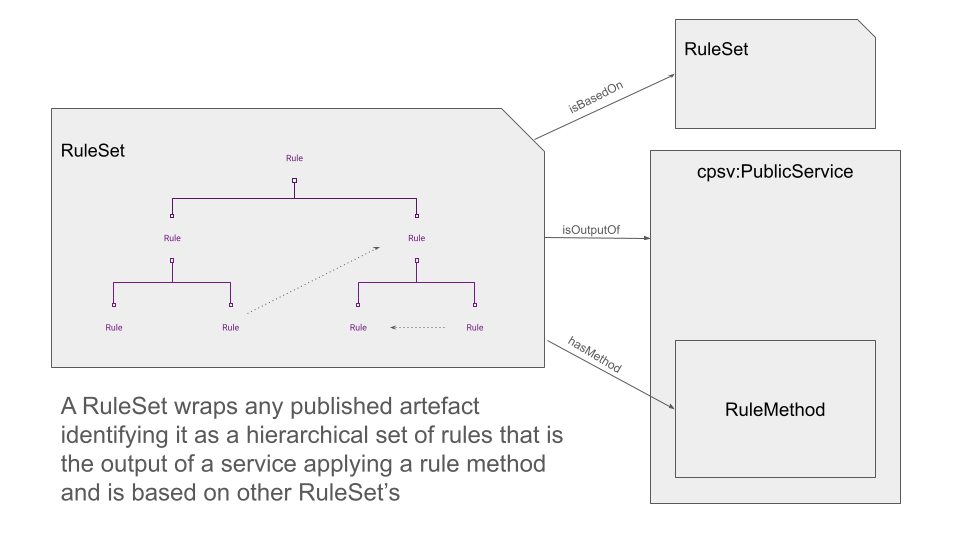
A core overview of only the most important concepts in Core Public Rule Management Vocabulary (CPRMV) is shown below. Everything else in Core Public Rule Management Vocabulary (CPRMV) enfolds from this core insight. RuleSet's are sets of possibly nested Rule's in a hierarchical (tree) structure that are created and managed within public services by applying RuleMethod's for which they are denoted as (part of the) ouput of. They can be based on other RuleSets.

CPRMV main concepts
Figure 1 CPRMV main concepts

All concepts in relation to the Core Public Rule Management Vocabulary (CPRMV) are defined in the normative sections hereafter. This section gives a non normative main overview of the concepts of the Core Public Rule Management Vocabulary (CPRMV).

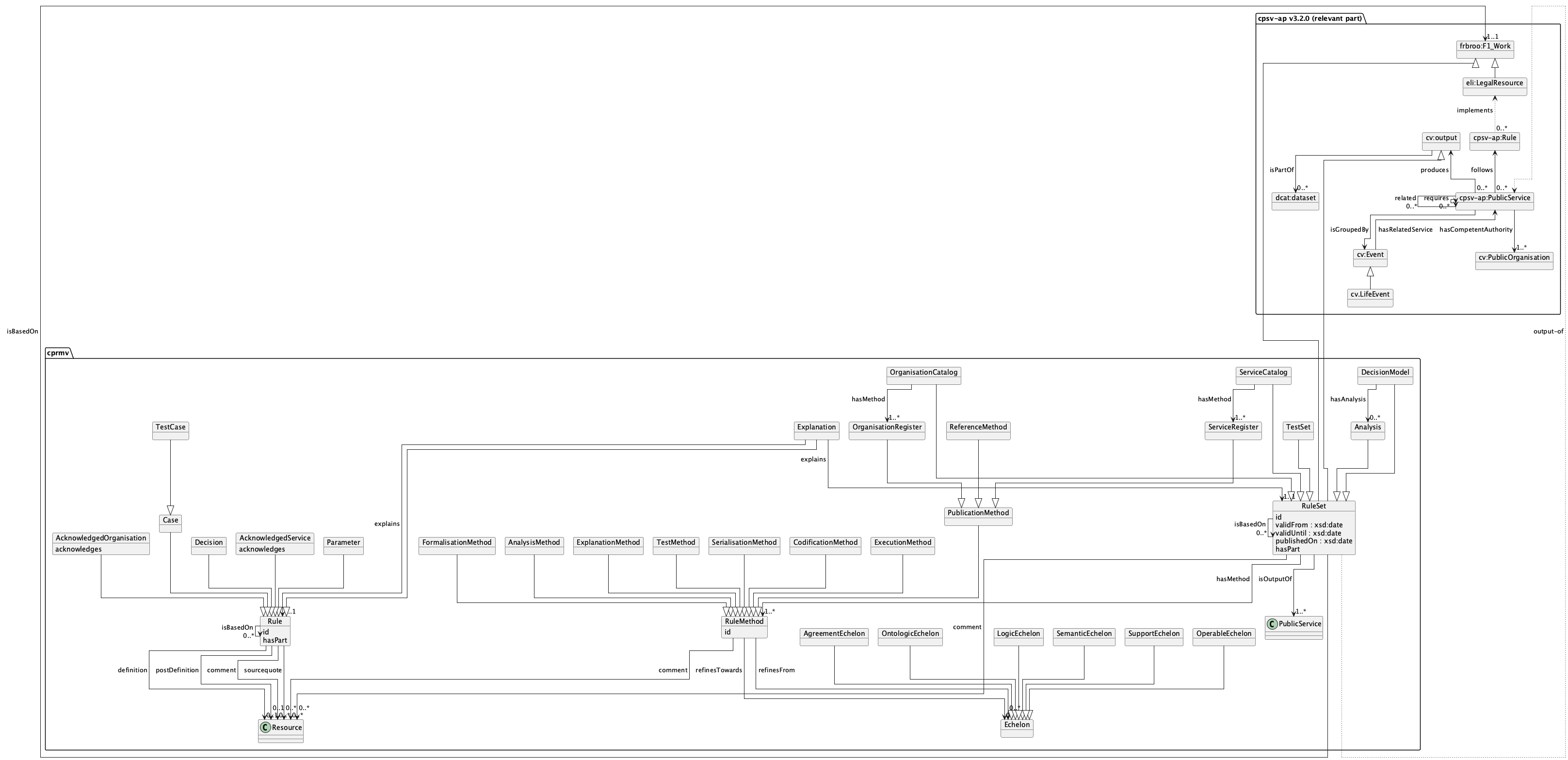
The following class diagram overview shows the main Core Public Rule Management Vocabulary (CPRMV) concepts in relation to each other and how they relate to the Core Public Service Vocabulary Application ProPSV-AP) (version 3.2.0). Note that the overview does not include the entire Core Public Service Vocabulary Application ProPSV-AP), only a relevant part. The overview does still also only include a selection of all concepts within the Core Public Rule Management Vocabulary (CPRMV).

CPRMV main concepts
Figure 2 CPRMV main concepts

1.3 Echelons and Instruments

When creating rules within the context of a public service, Instruments are used. Instruments being either methods, standards or tools. When looked at a public service from a government wide perspective, rules initially are always elicitated in Natural Language (or visuals) in generic terms and then get more elaborated using instruments in steps typically involving several public services develivered by several public organisations, all the way to more directly operable forms of rules. Even decisions that are made based on rules are automatically related to all this. As these decisions form evidence, also all data involved relates to rules. The creation, usage and maintenance of all these rules forms an iterative design process. The CPRMV categorizes Ruleset's and the instruments to manage them to be related to specific so called Echelons, a concept borrowed from design science (), that can be distinguished in this government wide design process without enforcing any design method. In general the following Echelons can be distinguished as such:

  1. Natural Echelon : Rules are denoted in the form of natural language or visuals agreed upon.
  2. Semantical Echelon : Rules that also formalise the concepts (What is) and norms (What needs to be) that are identified in official natural language descriptions of rules.
  3. Ontological Echelon : Rules that also formalise relations between formalised concepts and norms into information models.
  4. Logical Echelon : Rules that elaborate on information models to the point they are operable, like process and decision models. Rules tied to this Echelon are still not necesarily tied to be followed in a specific public service of a specific organisation and can be reusable.
  5. Operable Echelon : The operable rules that are actually followed in the primary operational process of a specific public service being delivered by a specific organisation.
  6. Support Echelon : Rules related to support processes. Support for the rules themselves or the output of public services based on these rules.

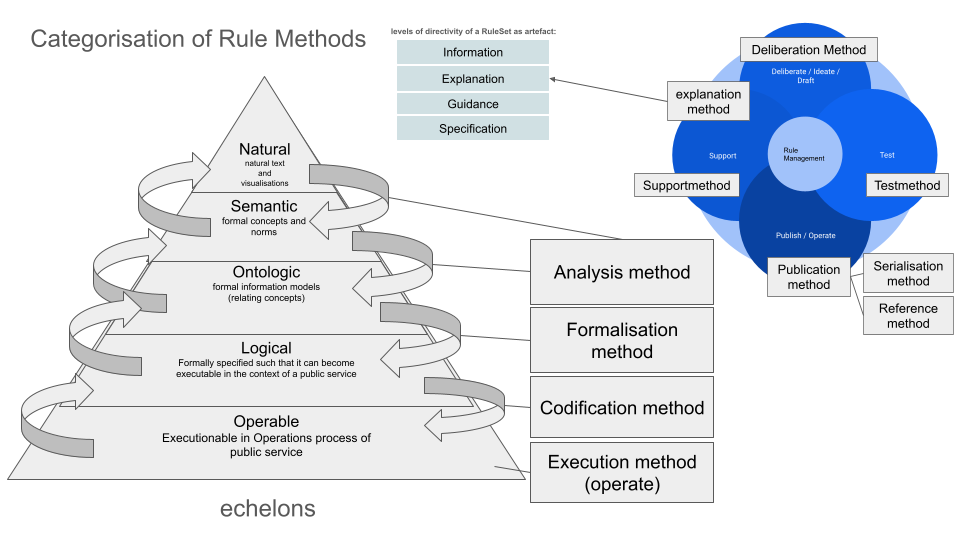
Instruments are used to create these types of rulesets, based on rulesets that fall into the same or a different Echelon. An instrument therefor helps refining rulesets from and towards Echelons and for any ruleset the creation of another ruleset is based on, a ruleset first has to be published in some way such that they can be referenced and found in some type of rule registry related to a services register and organisation register. Regardless of the Echelon to which an instrument is tied with which rules in a ruleset are created, a ruleset can also be tested in some way using instruments for testing and sets of testcases are rulesets themselves. Also, any artefact typically gets explained in explanatory artefacts. For this, the Core Public Rule Management Vocabulary (CPRMV) defines additional Echelons relating to publishing, testing and explaining specification artefacts and which have their own specific related instruments and artefacts. A standard and a tool is always related to a method. And several generic methods relating to the Echelons can be distinguished. This results in the following relations between generic methods (cprmv:RuleMethod) and echelons the Core Public Rule Management Vocabulary (CPRMV) defines:

CPRMV Echelons and Instruments
Figure 3 CPRMV Echelons and Instruments

A great number of people working in specific disciplines in specific domains work on rules using a great number of instruments already. To make all this accessible for each other, Core Public Rule Management Vocabulary (CPRMV) additionaly defines a governed value list of specific rule methods known and acknowledged to be in use somewhere within service delivery within the EU. A current overview of this is given in chapter 4.

2. About the CPRMV

This section is non-normative.

This specification defines the Core Public Rule Management Vocabulary (CPRMV). The Core Public Rule Management Vocabulary (CPRMV) is the basis for a standard for public rule management for which the regels.overheid.nl is the (Dutch) portal for all related knowledge and tooling for now.

This specification is in development in the context of the (Dutch) regels.overheid.nl project as well as part of the [GT4ASGA2PILOT8] project with Greek, French and Spanish partners. Comments, problems, wishes etcetera can be left through issues using the Git Issues page.

Besides this ReSpec documentation, the actual vocabulary is defined in the form of RDF(S)/OWL/SHACL designed to match how the Core Public Service Vocabulary Application ProPSV-AP) has also been specified in the same way. This specification of the CPRMV can be found here: CPRMV RDF(S)/OWL/SHACL specification

Also noteworthy is the development of a helper tool in the form of a so called CPRMV API: CPRMV API which can also be found in the Git repository: CPRMV API on Gitlab and which this specification also describes in chapter 5.

Also note the CHANGELOG.md and ROADMAP.md relating both the CPRMV as well as the CPRMV API

3. CPRMV Specification

3.1 Instrument

An instrument is something that is used in relation to rules. For instance a method, standard or tool

class diagram Instrument
Figure 4 class diagram Instrument
properties:
Property Type/Range Cardinality Definition

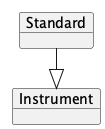
3.2 Standard

Denotes a standard that is used in relation to rules as an instrument.

subclass of: Instrument

class diagram Standard
Figure 5 class diagram Standard
properties:
Property Type/Range Cardinality Definition

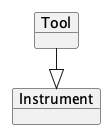
3.3 Tool

Denotes a tool that is used in relation to rules as an instrument.

subclass of: Instrument

class diagram Tool
Figure 6 class diagram Tool
properties:
Property Type/Range Cardinality Definition

3.4 Method

Denotes a method that is used in relation to rules as an instrument.

subclass of: Instrument

class diagram Tool
Figure 7 class diagram Tool
properties:
Property Type/Range Cardinality Definition

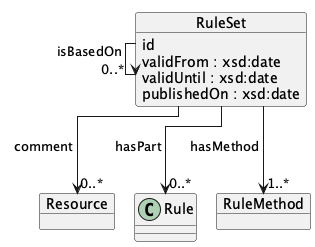
3.5 RuleSet

A bundle of specifying artefacts (being cprmv:Rule's) agreed upon as the output of a deliberation process within the service delivery of a cpsv:Publicservice. Also when combined with the CPSV-AP, being a cv:Output, a cprmv:RuleSet cprmv:is_part_of a dcat.Dataset.

subclass of: http://purl.org/vocab/frbr/coreEndeavor

subclass of: http://data.europa.eu/m8g/Output

subclass of: http://www.w3.org/ns/prov#Bundle

class diagram RuleSet
Figure 8 class diagram RuleSet
properties:
Property Type/Range Cardinality Definition
id 1..1 denotes a universal unique id with which to refer to what the cprmv object like RuleMethod's Explanation's, RuleSet's and Rule's represents.
isBasedOn RuleSet 0..* In the case of a RuleSet this property states the RuleSet to be derived from the RuleSet(s) in their entirety (all cprmv:Rules contained in the cprmv:RuleSet that is derived from, depending on whether they are defined with the same cprmv:hasMethod or not, can or must have matching ones in the cprmv:RuleSet that derives) possibly aggregated by analysis or formalisation (not codification). In the case of a cprmv:Rule it refers to the matching cprmv:Rule contained in a cprmv:RuleSet that is derived from by the RuleSet that contains the deriving cprmv:Rule (this must be the case). A cprmv:Rule in the cprmv:RuleSet that is derived from does not have to be referred by a cprmv:Rule contained in the deriving cprmv:RuleSet if both RuleSet's contain only cprmv:Rule's defined with the same cprmv:method, in which case this implies the cprmv:Rule implicitly becomes part of the deriving cprmv:RuleSet as is. Multiple cprmv:Rule's / cprmv:RuleSet's can be derived from within the same cprmv:Rule / cprmv:RuleSet
isOutputOf http://purl.org/vocab/cpsv#PublicService 1..* denotes a cprmv:RuleSet to be produced as cv:Ouput of a cpsv:PublicService
method RuleMethod 1..* denotes the cprmv:RuleMethod used to define the cprmv:RuleSet
validFrom xsd:date 1..1 denotes the date from which day on the RuleSet is to be held valid.
validUntil xsd:date 0..1 denotes the date until which day on the RuleSet is to be held valid. On the day of this date, the RuleSet is no longer valid. If no date value is set, this means the RuleSet is valid until further notice.
publishedOn xsd:date 0..1 denotes the date at which day the RuleSet has been officially published. Note that the RuleSet may denote to be valid from a date before this date of publishing.
hasPart 0..1 denotes the ordered list of Rule's as the parts a Rule(Set) can have and together with the cprmv:definition and cprmv:postDefinition properties (in case of Rule's') define the Rule(Set) by concatenating the definition, the definitions of the cprmv:Rule's that are part of it (recursively in order) and their postDefinition's
comment http://www.w3.org/2000/01/rdf-schema#Resource 0..* denotes information as comment for a cprmv:Rule, cprmv:RuleSet or cprmv:RuleMethod

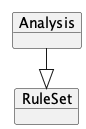
3.6 Analysis

A Rule Set that has been produced by following a Analysis Method.

subclass of: RuleSet

class diagram Analysis
Figure 9 class diagram Analysis
properties:
Property Type/Range Cardinality Definition

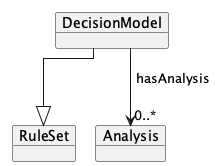
3.7 DecisionModel

A Rule Set that has been produced by following a Formalisation Method.

subclass of: RuleSet

class diagram DecisionModel
Figure 10 class diagram DecisionModel
properties:
Property Type/Range Cardinality Definition
hasAnalysis Analysis 0..* denotes the Analysis a DecisionModel is based on.

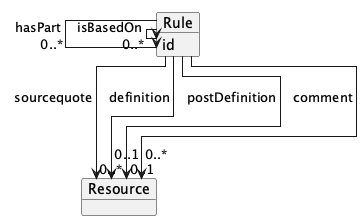
3.8 Rule

A Rule denotes a part of a specification artifact agreed upon as the output of a deliberation process in the context of service delivery which can be expressed in many forms for instance in the form of natural language like articles in laws as well as more formal business rules for automation of decisions.

subclass of: http://www.w3.org/ns/prov#Entity

class diagram Rule
Figure 11 class diagram Rule
properties:
Property Type/Range Cardinality Definition
id 1..1 denotes a universal unique id with which to refer to what the cprmv object like RuleMethod's Explanation's, RuleSet's and Rule's represents.
isBasedOn Rule 0..* In the case of a RuleSet this property states the RuleSet to be derived from the RuleSet(s) in their entirety (all cprmv:Rules contained in the cprmv:RuleSet that is derived from, depending on whether they are defined with the same cprmv:hasMethod or not, can or must have matching ones in the cprmv:RuleSet that derives) possibly aggregated by analysis or formalisation (not codification). In the case of a cprmv:Rule it refers to the matching cprmv:Rule contained in a cprmv:RuleSet that is derived from by the RuleSet that contains the deriving cprmv:Rule (this must be the case). A cprmv:Rule in the cprmv:RuleSet that is derived from does not have to be referred by a cprmv:Rule contained in the deriving cprmv:RuleSet if both RuleSet's contain only cprmv:Rule's defined with the same cprmv:method, in which case this implies the cprmv:Rule implicitly becomes part of the deriving cprmv:RuleSet as is. Multiple cprmv:Rule's / cprmv:RuleSet's can be derived from within the same cprmv:Rule / cprmv:RuleSet
hasPart 0..1 denotes the ordered list of Rule's as the parts a Rule(Set) can have and together with the cprmv:definition and cprmv:postDefinition properties (in case of Rule's') define the Rule(Set) by concatenating the definition, the definitions of the cprmv:Rule's that are part of it (recursively in order) and their postDefinition's
definition http://www.w3.org/2000/01/rdf-schema#Resource 0..1 denotes the head part of the definition of a cprmv:Rule which is either a rdfs:text or any representation of knowledge in the form of rdf
postDefinition http://www.w3.org/2000/01/rdf-schema#Resource 0..1 denotes the tail part of the definition of a cprmv:Rule which is either a rdfs:text or any representation of knowledge in the form of rdf. This property is only to be used when there are one or more cprmv:Rule's contained by the cprmv:Rule this property belongs to
comment http://www.w3.org/2000/01/rdf-schema#Resource 0..* denotes information as comment for a cprmv:Rule, cprmv:RuleSet or cprmv:RuleMethod
source quote http://www.w3.org/2000/01/rdf-schema#Resource 0..* replicates (a part of) the definition of the cprmv:Rule that is being extended

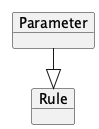
3.9 Parameter

A Rule that forms a parameter. Normally these are specific small parts of a Rule Set that are changed more often than the rest of a Rule Set. They normally have a definition holding information that is of a simple type like a number, date etc.

subclass of: Rule

class diagram Parameter
Figure 12 class diagram Parameter
properties:
Property Type/Range Cardinality Definition

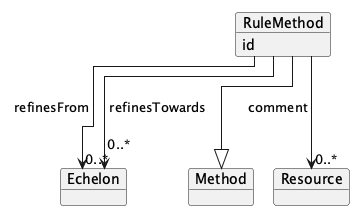
3.10 RuleMethod

A Rule Method is a acknowledged known method as an instrument for defining Rule's, either from scratch through deliberation and / or based on existing Rule's.

subclass of: Tool

class diagram RuleMethod
Figure 13 class diagram RuleMethod
properties:
Property Type/Range Cardinality Definition
id 1..1 denotes a universal unique id with which to refer to what the cprmv object like RuleMethod's Explanation's, RuleSet's and Rule's represents.
comment http://www.w3.org/2000/01/rdf-schema#Resource 0..* denotes information as comment for a cprmv:Rule, cprmv:RuleSet or cprmv:RuleMethod
refinesTowards echelon 0..* Denotes the Echelon a RuleMethod refines RuleSets towards.
refinesFrom echelon 0..* Denotes the Echelon a RuleMethod refines RuleSets from.

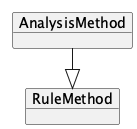
3.11 AnalysisMethod

A Rule Method with which an existing Rule is extended through analysis, which does not yet entirely formalises a Rule semantically but only defines what is to be seen as a separate Rule and adds metadata to it or normalises its form etcetera.

subclass of: RuleMethod

class diagram AnalysisMethod
Figure 14 class diagram AnalysisMethod
properties:
Property Type/Range Cardinality Definition
refinesTowards OntologicEchelon, SemanticEchelon, NaturalEchelon 0..* Denotes the Echelon a RuleMethod refines RuleSets towards.
refinesFrom OntologicEchelon, SemanticEchelon, NaturalEchelon 0..* Denotes the Echelon a RuleMethod refines RuleSets from.

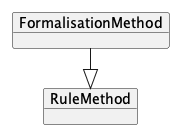
3.12 FormalisationMethod

A Rule Method with which an existing Rule is extended through formalisation, which entirely formalises a Rule semantically as far as possible and makes it represented in a interoperable way to the point cprmv compatible systems can comsume them within processes for delivering Public Services.

subclass of: RuleMethod

class diagram FormalisationMethod
Figure 15 class diagram FormalisationMethod
properties:
Property Type/Range Cardinality Definition
refinesTowards OperableEchelon, LogicEchelon 0..* Denotes the Echelon a RuleMethod refines RuleSets towards.
refinesFrom LogicEchelon, OntologicEchelon, SemanticEchelon, NaturalEchelon 0..* Denotes the Echelon a RuleMethod refines RuleSets from.

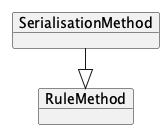
3.13 SerialisationMethod

A meta Rule Method with which an existing Rule is serialised as a textual at can be stored. Think about XML, JSON, YAML, Turtle as common ways to do this.

subclass of: RuleMethod

class diagram SerialisationMethod
Figure 16 class diagram SerialisationMethod
properties:
Property Type/Range Cardinality Definition

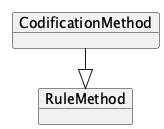
3.14 CodificationMethod

A Rule Method with which an existing Rule is extended through codification, which entirely formalises a Rule semantically if necesary as well as codifies them into an executable form that can be utilised by specific systems within processes for delivering Public Services.

subclass of: RuleMethod

class diagram CodificationMethod
Figure 17 class diagram CodificationMethod
properties:
Property Type/Range Cardinality Definition
refinesTowards OperableEchelon 0..* Denotes the Echelon a RuleMethod refines RuleSets towards.
refinesFrom LogicEchelon, OntologicEchelon, SemanticEchelon, NaturalEchelon 0..* Denotes the Echelon a RuleMethod refines RuleSets from.

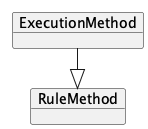
3.15 ExecutionMethod

A Rule Method with which an existing Rule is executed in the context of delivering a Public Service.

subclass of: RuleMethod

class diagram ExecutionMethod
Figure 18 class diagram ExecutionMethod
properties:
Property Type/Range Cardinality Definition
refinesTowards OperableEchelon 0..* Denotes the Echelon a RuleMethod refines RuleSets towards.
refinesFrom OperableEchelon, LogicEchelon, NaturalEchelon 0..* Denotes the Echelon a RuleMethod refines RuleSets from.

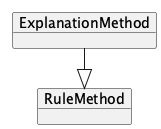
3.16 ExplanationMethod

An explanation method defines the method for producing Explanations in relation to cprmv:Rule(Set)'s'

subclass of: RuleMethod

class diagram ExplanationMethod
Figure 19 class diagram ExplanationMethod
properties:
Property Type/Range Cardinality Definition
refinesTowards OperableEchelon 0..* Denotes the Echelon a RuleMethod refines RuleSets towards.
refinesFrom OperableEchelon, LogicEchelon, OntologicEchelon, SemanticEchelon, NaturalEchelon 0..* Denotes the Echelon a RuleMethod refines RuleSets from.

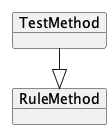
3.17 TestMethod

A Rule Method with which Rule's are defined that describe test scenario's defined in cprmv:TestSet's containing cprmv:TestCase's, which are specialised cprmv:RuleSet's and cprmv:Rule's and that can be tested in the context of a cprmv:RuleSet's.

subclass of: RuleMethod

class diagram TestMethod
Figure 20 class diagram TestMethod
properties:
Property Type/Range Cardinality Definition
refinesTowards SupportEchelon 0..* Denotes the Echelon a RuleMethod refines RuleSets towards.
refinesFrom OperableEchelon 0..* Denotes the Echelon a RuleMethod refines RuleSets from.

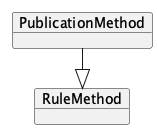
3.18 PublicationMethod

A Rule Method for publication of the definition of Rule(Set)'s apart from the Execution of them...

subclass of: RuleMethod

class diagram PublicationMethod
Figure 21 class diagram PublicationMethod
properties:
Property Type/Range Cardinality Definition
refinesTowards OperableEchelon 0..* Denotes the Echelon a RuleMethod refines RuleSets towards.
refinesFrom OperableEchelon, LogicEchelon, OntologicEchelon, SemanticEchelon, NaturalEchelon 0..* Denotes the Echelon a RuleMethod refines RuleSets from.

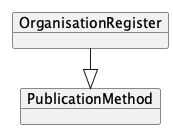
3.19 OrganisationRegister

A Rule Method for publication of a catalog of organisations thet produce RuleSet's as part of their service delivery.

subclass of: PublicationMethod

class diagram OrganisationRegister
Figure 22 class diagram OrganisationRegister
properties:
Property Type/Range Cardinality Definition

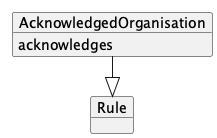
3.20 AcknowledgedOrganisation

A Rule denoting the official acknowledgement of an organisation (cv:PublicOrganisation) that produce RuleSet's as part of their service delivery.

subclass of: Rule

class diagram AcknowledgedOrganisation
Figure 23 class diagram AcknowledgedOrganisation
properties:
Property Type/Range Cardinality Definition
acknowledges 0..1 Denotes the CPSV-AP:PublicOrganisation / CV:PublicService an AcknowledgedOrganisation / AcknowledgedService acknowledges as a Rule

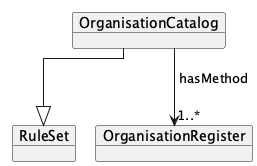
3.21 OrganisationCatalog

A RuleSet that forms a catalog of officially acknowledged organisations (cv:PublicOrganisation) that produce RuleSet's as part of their service delivery.

subclass of: RuleSet

class diagram OrganisationCatalog
Figure 24 class diagram OrganisationCatalog
properties:
Property Type/Range Cardinality Definition
method OrganisationRegister 1..* denotes the cprmv:RuleMethod used to define the cprmv:RuleSet

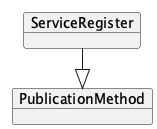
3.22 ServiceRegister

A Rule Method for publication of a catalog of services (CPSV-AP:PublicService) in which RuleSet's are produced. There is none that does not.

subclass of: PublicationMethod

class diagram ServiceRegister
Figure 25 class diagram ServiceRegister
properties:
Property Type/Range Cardinality Definition

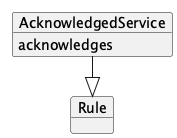
3.23 AcknowledgedService

A Rule denoting the official acknowledgement of a service (CPSV-AP:PublicService) in which RuleSet's are produced.

subclass of: Rule

class diagram AcknowledgedService
Figure 26 class diagram AcknowledgedService
properties:
Property Type/Range Cardinality Definition
acknowledges 0..1 Denotes the CPSV-AP:PublicOrganisation / CV:PublicService an AcknowledgedOrganisation / AcknowledgedService acknowledges as a Rule

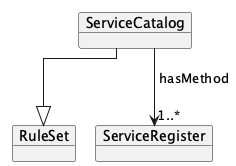
3.24 ServiceCatalog

A RuleSet that forms a catalog of officially acknowledged services (CPSV-AP:PublicService) in which RuleSet's are produced.

subclass of: RuleSet

class diagram ServiceCatalog
Figure 27 class diagram ServiceCatalog
properties:
Property Type/Range Cardinality Definition
method ServiceRegister 1..* denotes the cprmv:RuleMethod used to define the cprmv:RuleSet

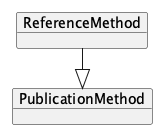
3.25 ReferenceMethod

A meta Rule Method for the referencing of Rule(Set)'s apart from the operationalisation of them...

subclass of: PublicationMethod

class diagram ReferenceMethod
Figure 28 class diagram ReferenceMethod
properties:
Property Type/Range Cardinality Definition

3.26 Explanation

A cprmv:Explanation is a cprmv:Rule defined with a cprmv:ExplanationMethod. This Rule contains a concise explanation of one or multiple Rule's or RuleSet's.

subclass of: Rule

class diagram TestCase
Figure 29 class diagram TestCase
properties:
Property Type/Range Cardinality Definition
explains RuleSet, Rule 1..1 denotes the cprmv:Rule(Set) a cprmv:Eplanation holds explanatory content of for the use of explaining them in the systems that use them for delivering Public Services

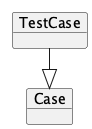
3.27 TestCase

A TestCase is a cprmv:Case defined for and following a TestMethod

subclass of: Case

class diagram TestCase
Figure 30 class diagram TestCase
properties:
Property Type/Range Cardinality Definition

3.28 TestSet

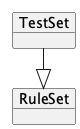
A TestSet is a cprmv:RuleSet containing cprmv:TestCase's defined for following a TestMethod

subclass of: RuleSet

class diagram TestSet
Figure 31 class diagram TestSet
properties:
Property Type/Range Cardinality Definition

3.29 Decision

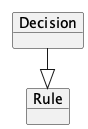
A Decision is a cprmv:Rule defined following a ExecutionMethod

subclass of: Rule

class diagram Decision
Figure 32 class diagram Decision
properties:
Property Type/Range Cardinality Definition

3.30 Case

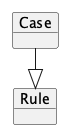
A Case is a cprmv:Rule containing a list of Decisions defined following a ExecutionMethod

subclass of: Rule

class diagram Case
Figure 33 class diagram Case
properties:
Property Type/Range Cardinality Definition

3.31 Echelon

An echelon is a category in which a RuleSet can be categorized in the context of service delivery, loosely based on the Theory of Hierarchical, Multilevel Systems (M. D. Mesarovic, D. Macko, Y. Takahara).

class diagram echelon
Figure 34 class diagram echelon
properties:
Property Type/Range Cardinality Definition

3.32 NaturalEchelon

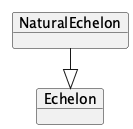
Echelon tied to the contract management process of a service based on USM in which solutions are designed as descriptions in natural language and it's grammar and/or visualisations.

subclass of: echelon

class diagram NaturalEchelon
Figure 35 class diagram NaturalEchelon
properties:
Property Type/Range Cardinality Definition

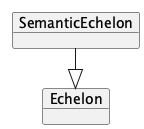
3.33 SemanticEchelon

Echelon tied to the contract management process of a service based on USM in which solutions are designed in terms of Concepts (What is) and Norms (What needs to be) based on descriptions in natural language.

subclass of: echelon

class diagram SemanticEchelon
Figure 36 class diagram SemanticEchelon
properties:
Property Type/Range Cardinality Definition

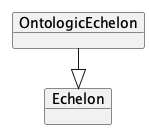
3.34 OntologicEchelon

Echelon tied to the contract management process of a service based on USM in which solutions are designed in terms of information models consisting of related to Concepts and Norms (defined within the context of the semantic echelon).

subclass of: echelon

class diagram OntologicEchelon
Figure 37 class diagram OntologicEchelon
properties:
Property Type/Range Cardinality Definition

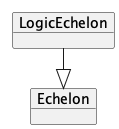
3.35 LogicEchelon

Echelon tied to the contract management process of a service based on USM in which solutions are designed in terms of logically formalised models such that they are operable, like decision and process models, based on related Concepts and Norms (defined within the context of the ontologic / semantic echelon).

subclass of: echelon

class diagram LogicEchelon
Figure 38 class diagram LogicEchelon
properties:
Property Type/Range Cardinality Definition

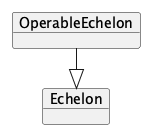
3.36 OperableEchelon

Echelon tied to the operations process of a service based on USM in which operable solutions from echelons tied to the contract management process of a service based on USM are followed in service delivery.

subclass of: echelon

class diagram OperableEchelon
Figure 39 class diagram OperableEchelon
properties:
Property Type/Range Cardinality Definition

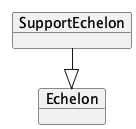
3.37 SupportEchelon

Echelon tied to the three support processes of a service based on USM in which solutions are evaluated.

subclass of: echelon

class diagram SupportEchelon
Figure 40 class diagram SupportEchelon
properties:
Property Type/Range Cardinality Definition

4. CPRMV Methods

4.1 rulemethods

Value list of acknowledged rule methods.

class diagram rulemethods
Figure 41 class diagram rulemethods
properties:
Property Type/Range Cardinality Definition
acknowledged 0..1 a list with RuleMethod's that are acknowledged as part of the rule methods value list.
https://cprmv.open-regels.nl/0.4.3/serve-api/core-yaml
https://cprmv.open-regels.nl/0.4.3/serve-api/core-xml
https://cprmv.open-regels.nl/0.4.3/serve-api/core-api
https://cprmv.open-regels.nl/0.4.3/serve-api/core-web
https://cprmv.open-regels.nl/0.4.3/serve-api/core-python
https://cprmv.open-regels.nl/0.4.3/serve-api/core-markdown
https://cprmv.open-regels.nl/0.4.3/serve-api/core-json
https://cprmv.open-regels.nl/0.4.3/methods/regalgo
https://cprmv.open-regels.nl/0.4.3/methods/openfisca
https://cprmv.open-regels.nl/0.4.3/methods/catala
https://cprmv.open-regels.nl/0.4.3/methods/elinl
https://cprmv.open-regels.nl/0.4.3/methods/elifmx4
https://cprmv.open-regels.nl/0.4.3/methods/juriconnect
https://cprmv.open-regels.nl/0.4.3/methods/cprmvapi
https://cprmv.open-regels.nl/0.4.3/methods/regelrecht
https://cprmv.open-regels.nl/0.4.3/methods/iou-operaton
https://cprmv.open-regels.nl/0.4.3/methods/iou-norms
https://cprmv.open-regels.nl/0.4.3/methods/roo-catalogus
https://cprmv.open-regels.nl/0.4.3/methods/roo-uri
https://cprmv.open-regels.nl/0.4.3/methods/roo
https://cprmv.open-regels.nl/0.4.3/methods/dso-service-register
https://cprmv.open-regels.nl/0.4.3/methods/dso
https://cprmv.open-regels.nl/0.4.3/methods/norms-backend.linkeddata.open-regels.nl
https://cprmv.open-regels.nl/0.4.3/methods/operaton.open-regels.nl
https://cprmv.open-regels.nl/0.4.3/methods/eucellar-fmx4
https://cprmv.open-regels.nl/0.4.3/methods/repository-overheid-nl-cvdr
https://cprmv.open-regels.nl/0.4.3/methods/repository-overheid-nl-bwb
https://cprmv.open-regels.nl/0.4.3/methods/repository-overheid-nl
https://cprmv.open-regels.nl/0.4.3/methods/operaton
https://cprmv.open-regels.nl/0.4.3/methods/sttr
https://cprmv.open-regels.nl/0.4.3/methods/dmn13
https://cprmv.open-regels.nl/0.4.3/methods/fmx4
https://cprmv.open-regels.nl/0.4.3/methods/cvdr
https://cprmv.open-regels.nl/0.4.3/methods/bwb
https://cprmv.open-regels.nl/0.4.3/methods/flint
https://cprmv.open-regels.nl/0.4.3/methods/jas
https://cprmv.open-regels.nl/0.4.3/methods/alef-regelspraak

4.2 analysismethods

Value list of acknowledged analysis methods.

class diagram analysismethods
Figure 42 class diagram analysismethods
properties:
Property Type/Range Cardinality Definition
acknowledged 0..1 a list with RuleMethod's that are acknowledged as part of the rule methods value list.
https://cprmv.open-regels.nl/0.4.3/methods/iou-norms
https://cprmv.open-regels.nl/0.4.3/methods/fmx4
https://cprmv.open-regels.nl/0.4.3/methods/cvdr
https://cprmv.open-regels.nl/0.4.3/methods/bwb
https://cprmv.open-regels.nl/0.4.3/methods/flint
https://cprmv.open-regels.nl/0.4.3/methods/jas

4.3 formalisationmethods

Value list of acknowledged formalisation methods.

class diagram formalisationmethods
Figure 43 class diagram formalisationmethods
properties:
Property Type/Range Cardinality Definition
acknowledged 0..1 a list with RuleMethod's that are acknowledged as part of the rule methods value list.
https://cprmv.open-regels.nl/0.4.3/methods/regalgo
https://cprmv.open-regels.nl/0.4.3/methods/openfisca
https://cprmv.open-regels.nl/0.4.3/methods/catala
https://cprmv.open-regels.nl/0.4.3/methods/alef-regelspraak
https://cprmv.open-regels.nl/0.4.3/methods/regelrecht
https://cprmv.open-regels.nl/0.4.3/methods/iou-norms
https://cprmv.open-regels.nl/0.4.3/methods/sttr
https://cprmv.open-regels.nl/0.4.3/methods/dmn13

4.4 serialisationmethods

Value list of acknowledged serialisation methods.

class diagram serialisationmethods
Figure 44 class diagram serialisationmethods
properties:
Property Type/Range Cardinality Definition
acknowledged 0..1 a list with RuleMethod's that are acknowledged as part of the rule methods value list.
https://cprmv.open-regels.nl/0.4.3/methods/regelrecht
https://cprmv.open-regels.nl/0.4.3/methods/iou-norms
https://cprmv.open-regels.nl/0.4.3/methods/sttr
https://cprmv.open-regels.nl/0.4.3/methods/dmn13
https://cprmv.open-regels.nl/0.4.3/methods/fmx4
https://cprmv.open-regels.nl/0.4.3/methods/cvdr
https://cprmv.open-regels.nl/0.4.3/methods/bwb

4.5 codificationmethods

Value list of acknowledged codification methods.

class diagram codificationmethods
Figure 45 class diagram codificationmethods
properties:
Property Type/Range Cardinality Definition
acknowledged 0..1 a list with RuleMethod's that are acknowledged as part of the rule methods value list.

4.6 testmethods

Value list of acknowledged test methods.

class diagram testmethods
Figure 46 class diagram testmethods
properties:
Property Type/Range Cardinality Definition
acknowledged 0..1 a list with RuleMethod's that are acknowledged as part of the rule methods value list.

4.7 executionmethods

Value list of acknowledged execution methods.

class diagram executionmethods
Figure 47 class diagram executionmethods
properties:
Property Type/Range Cardinality Definition
acknowledged 0..1 a list with RuleMethod's that are acknowledged as part of the rule methods value list.
https://cprmv.open-regels.nl/0.4.3/methods/regelrecht
https://cprmv.open-regels.nl/0.4.3/methods/operaton

4.8 publicationmethods

Value list of acknowledged publication methods.

class diagram publicationmethods
Figure 48 class diagram publicationmethods
properties:
Property Type/Range Cardinality Definition
acknowledged 0..1 a list with RuleMethod's that are acknowledged as part of the rule methods value list.
https://cprmv.open-regels.nl/0.4.3/methods/regelrecht
https://cprmv.open-regels.nl/0.4.3/methods/roo-catalogus
https://cprmv.open-regels.nl/0.4.3/methods/roo-uri
https://cprmv.open-regels.nl/0.4.3/methods/roo
https://cprmv.open-regels.nl/0.4.3/methods/dso-service-register
https://cprmv.open-regels.nl/0.4.3/methods/dso
https://cprmv.open-regels.nl/0.4.3/methods/norms-backend.linkeddata.open-regels.nl
https://cprmv.open-regels.nl/0.4.3/methods/operaton.open-regels.nl
https://cprmv.open-regels.nl/0.4.3/methods/eucellar-fmx4
https://cprmv.open-regels.nl/0.4.3/methods/repository-overheid-nl-cvdr
https://cprmv.open-regels.nl/0.4.3/methods/repository-overheid-nl-bwb

4.9 referencemethods

Value list of acknowledged reference methods.

class diagram referencemethods
Figure 49 class diagram referencemethods
properties:
Property Type/Range Cardinality Definition
acknowledged 0..1 a list with RuleMethod's that are acknowledged as part of the rule methods value list.
https://cprmv.open-regels.nl/0.4.3/methods/elinl
https://cprmv.open-regels.nl/0.4.3/methods/elifmx4
https://cprmv.open-regels.nl/0.4.3/methods/juriconnect
https://cprmv.open-regels.nl/0.4.3/methods/cprmvapi

5. CPRMV Method Modules

5.1 bwb (method module)

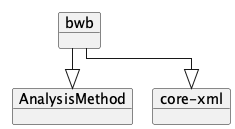
The bwb method is the official analysis and serialisation method for legal rulesets defined by Dutch national government organisations focused on the structure and presentation thereof. It also specifies how to refer to rulesets using a BWB id which is to be used within the Juriconnect reference method. BWB is based on Akoma Ntoso and XML serialisation.

See method repository-overheid-nl fore more information

5.1.1 bwb

zie: https://www.overheid.nl/sites/default/etten/Procedurehandboek_BWB_3.7.pdf and https://www.overheid.nl/sites/default/df/Handleiding%2BSRU%2BBWB.pdf

subclass of: https://cprmv.open-regels.nl/0.4.3/methods/module

subclass of: AnalysisMethod

subclass of: core.xml

class diagram bwb
Figure 50 class diagram bwb
properties:
Property Type/Range Cardinality Definition

5.2 cvdr (method module)

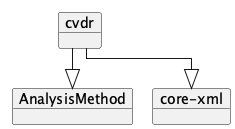
The cvdrmethod is the official analysis and serialisation method for legal rulesets defined by Dutch local governments focused on the structure and presentation thereof. It also specifies how to refer to rulesets using a CVDR id which is to be used within the Juriconnect reference method. CVDR is based on Akoma Ntoso and XML serialisation.

See method repository-overheid-nl fore more information

5.2.1 cvdr

zie: https://www.overheid.nl/sites/default/df/Handleiding%2BSRU%2BBWB.pdf

subclass of: https://cprmv.open-regels.nl/0.4.3/methods/module

subclass of: AnalysisMethod

subclass of: core.xml

class diagram cvdr
Figure 51 class diagram cvdr
properties:
Property Type/Range Cardinality Definition

5.3 dmn13 (method module)

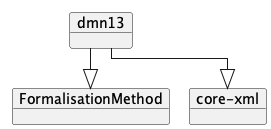
The DMN 1.3 method is a well known formalisation method by the OMG Group to express Decision Models. It typically uses XML as a serialisation format.

5.3.1 dmn13

see https://www.omg.org/spec/DMN/1.3/About-DMN

subclass of: https://cprmv.open-regels.nl/0.4.3/methods/module

subclass of: FormalisationMethod

subclass of: core.xml

class diagram dmn13
Figure 52 class diagram dmn13
properties:
Property Type/Range Cardinality Definition

5.4 sttr (method module)

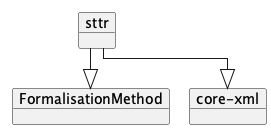
The STTR method is a formalisation method based on DMN used within the Dutch environment law domain (Digitaal Stelsel Omgevingswet (DSO)). See https://iplo.nl/digitaal-stelsel/aansluiten/standaarden/sttr-imtr/ for more information.

5.4.1 sttr

see https://iplo.nl/digitaal-stelsel/aansluiten/standaarden/sttr-imtr/

subclass of: https://cprmv.open-regels.nl/0.4.3/methods/module

subclass of: FormalisationMethod

subclass of: core.xml

class diagram sttr
Figure 53 class diagram sttr
properties:
Property Type/Range Cardinality Definition

5.5 eli (method module)

The eli method is a well known reference method at EU level conforming to the ELI standard.

5.5.1 elinl

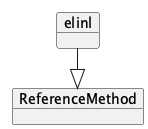
Experimental ELI for BWB and CVDR (Dutch standards)

subclass of: ReferenceMethod

class diagram elinl
Figure 54 class diagram elinl
properties:
Property Type/Range Cardinality Definition

5.5.2 elifmx4

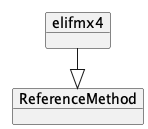
ELI references to Formex 4 documents in EU CELLAR

subclass of: ReferenceMethod

class diagram elifmx4
Figure 55 class diagram elifmx4
properties:
Property Type/Range Cardinality Definition

5.6 eucellar-fmx4 (method module)

5.6.1 eucellar-fmx4

see: ...

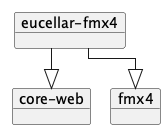
subclass of: https://cprmv.open-regels.nl/0.4.3/methods/module

subclass of: core.web

subclass of: fmx4

class diagram eucellar-fmx4
Figure 56 class diagram eucellar-fmx4
properties:
Property Type/Range Cardinality Definition

5.7 fmx4 (method module)

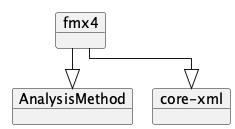
The fmx4 method is a well known analysis and serialisation method for, though mostly focused on the presentation of, legal ruleset's used by the EU's publication office. It typically serialises rules in a specific Akomo Ntoso compatible XML based format.

5.7.1 fmx4

see: ...

subclass of: https://cprmv.open-regels.nl/0.4.3/methods/module

subclass of: AnalysisMethod

subclass of: core.xml

class diagram fmx4
Figure 57 class diagram fmx4
properties:
Property Type/Range Cardinality Definition

5.8 juriconnect (method module)

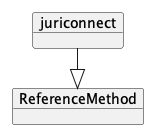
The juriconnect method is a well known Dutch reference method.

5.8.1 juriconnect

Juriconnect (not fully supported yet)

subclass of: https://cprmv.open-regels.nl/0.4.3/methods/module

subclass of: ReferenceMethod

class diagram juriconnect
Figure 58 class diagram juriconnect
properties:
Property Type/Range Cardinality Definition

5.9 open-regels.nl (method module)

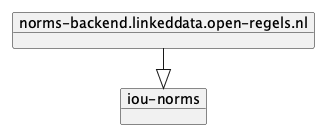
5.9.1 norms-backend.linkeddata.open-regels.nl

zie open-regels.nl

subclass of: iou-norms

class diagram norms-backend.linkeddata.open-regels.nl
Figure 59 class diagram norms-backend.linkeddata.open-regels.nl
properties:
Property Type/Range Cardinality Definition

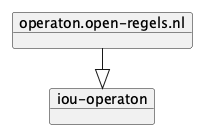
5.9.2 operaton.open-regels.nl

zie open-regels.nl

subclass of: iou-operaton

class diagram operaton.open-regels.nl
Figure 60 class diagram operaton.open-regels.nl
properties:
Property Type/Range Cardinality Definition

5.10 operaton (method module)

The Operaton method is a well known execution as well as publication method for BPMN process and DMN decision models. It can be combined with the dmn13 method as such.

5.10.1 Operaton

subclass of: https://cprmv.open-regels.nl/0.4.3/methods/module

subclass of: https://cprmv.open-regels.nl/0.4.3/serve-api/core.web

subclass of: dmn13

subclass of: ExecutionMethod

class diagram Operaton
Figure 61 class diagram Operaton
properties:
Property Type/Range Cardinality Definition

5.11 digitaal-stelsel-omgevingswet (method module)

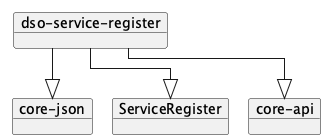
5.11.1 dso-service-register

DSO functioneleStructuurRef can be seen as (sub)services. As service register, the rulesetid is tied to one specific functioneleStructuurRef as well as organisation responsible for the rules.

subclass of: ServiceRegister

subclass of: core.api

subclass of: core.json

class diagram dso-service-register
Figure 62 class diagram dso-service-register
properties:
Property Type/Range Cardinality Definition

5.11.2 dso

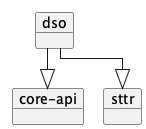
see https://iplo.nl/digitaal-stelsel/

subclass of: core.api

subclass of: sttr

class diagram dso
Figure 63 class diagram dso
properties:
Property Type/Range Cardinality Definition

5.12 register-overheids-organisaties (method module)

5.12.1 roo-catalogus

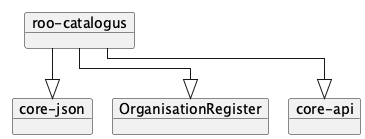
see https://organisaties.overheid.nl

subclass of: OrganisationRegister

subclass of: core.api

subclass of: core.json

class diagram roo-catalogus
Figure 64 class diagram roo-catalogus
properties:
Property Type/Range Cardinality Definition

5.12.2 roo-uri

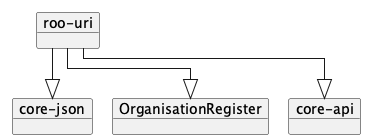
see https://organisaties.overheid.nl

subclass of: OrganisationRegister

subclass of: core.api

subclass of: core.json

class diagram roo-uri
Figure 65 class diagram roo-uri
properties:
Property Type/Range Cardinality Definition

5.12.3 roo

see https://organisaties.overheid.nl

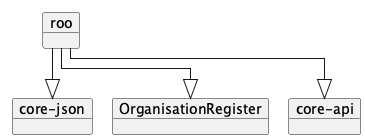
subclass of: OrganisationRegister

subclass of: core.api

subclass of: core.json

class diagram roo
Figure 66 class diagram roo
properties:
Property Type/Range Cardinality Definition

5.13 iou (method module)

Supported Rule Set Formats:

  1. Operaton server at operaton.open-regels.nl:
  1. IOU Norms API at open-regels.nl:

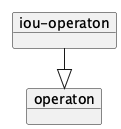
5.13.1 iou-operaton

zie open-regels.nl

subclass of: Operaton

class diagram iou-operaton
Figure 67 class diagram iou-operaton
properties:
Property Type/Range Cardinality Definition

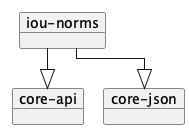
5.13.2 iou-norms

Sets of Norms from IOU Norms API V2 based on legal rules or Norm change announcement publications ahead of changes in legal rules

subclass of: core.api

subclass of: core.json

class diagram iou-norms
Figure 68 class diagram iou-norms
properties:
Property Type/Range Cardinality Definition

5.14 repository-overheid-nl (method module)

The repository.overheid.nl method is an official Dutch publication method (a web repository for official publications) for legal rulesets that are the output of the BWB and CVDR methods.

Supported Rule Set Id formats:

  1. BWB (Dutch Law Repository):
  1. CVDR (Dutch Municipal Regulations):

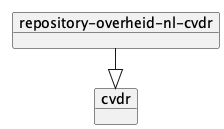
5.14.1 repository.overheid.nl-cvdr

zie repository.overheid.nl

subclass of: https://cprmv.open-regels.nl/0.4.3/methods/frbr-sru

subclass of: cvdr

class diagram repository.overheid.nl-cvdr
Figure 69 class diagram repository.overheid.nl-cvdr
properties:
Property Type/Range Cardinality Definition

5.14.2 repository.overheid.nl-bwb

zie repository.overheid.nl

subclass of: https://cprmv.open-regels.nl/0.4.3/methods/frbr-sru

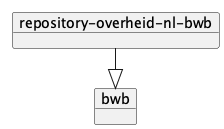
subclass of: bwb

class diagram repository.overheid.nl-bwb
Figure 70 class diagram repository.overheid.nl-bwb
properties:
Property Type/Range Cardinality Definition

6. CPRMV API

6.1 core-json (method module)

The core.json method is a serialisation method that serves as a basis for the support of JSON serialisations of RuleSet's for any RuleMethod that typically use JSON as a serialisation format.

The roo method is an example of such

This serialisation method is defined for support within API's that serve CPRMV metadated publications of which the CPRMV API is a reference implementation and should not be used directly and therefor it is definied in the cprmv-serve namespace.

6.1.1 core.json

CPRMV API - Generic JSON Serialisation Method

subclass of: https://cprmv.open-regels.nl/0.4.3/methods/module

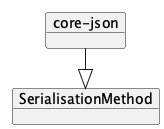
subclass of: SerialisationMethod

class diagram core.json
Figure 71 class diagram core.json
properties:
Property Type/Range Cardinality Definition

6.2 core-web (method module)

The core.web method is a publication method that serves as a basis for the support retrieval of RuleSet's that have been published and are retrieveable through HTTP.

The operaton and frbr-sru methods are examples of such.

This serialisation method is defined for support within API's that serve CPRMV metadated publications of which the CPRMV API is a reference implementation and should not be used directly and therefor it is definied in the cprmv-serve namespace.

6.2.1 core.web

CPRMV API - Generic Web Publication Method

subclass of: https://cprmv.open-regels.nl/0.4.3/methods/module

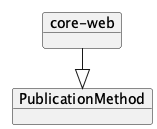
subclass of: PublicationMethod

class diagram core.web
Figure 72 class diagram core.web
properties:
Property Type/Range Cardinality Definition
repository-publication-location-format 0..1 The format of the URL to retrieve a publication

6.3 core-api (method module)

The core.api method is a publication method that serves as a basis for the support retrieval of RuleSet's that have been published and are retrieveable through an REST API. As such it is based on the core.web method.

The roo and dso methods are examples of such.

This publication method is defined for support within API's that serve CPRMV metadated publications of which the CPRMV API is a reference implementation and should not be used directly and therefor it is definied in the cprmv-serve namespace.

6.3.1 core.api

CPRMV API - Generic API Publication Method

subclass of: https://cprmv.open-regels.nl/0.4.3/methods/module

subclass of: core-web

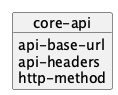
class diagram core.api
Figure 73 class diagram core.api
properties:
Property Type/Range Cardinality Definition
api-base-url 0..1 The base URL of the API
api-headers 0..1 The headers to use in requests to the API
HTTP method 0..1 The HTTP method with which to access the API. (default=GET)

6.4 core-xml (method module)

The core.xml method is a serialisation method that serves as a basis for the support of XML serialisations of RuleSet's for any RuleMethod that typically use XML as a serialisation format.

The fmx4 method is an example of such.

This serialisation method is defined for support within API's that serve CPRMV metadated publications of which the CPRMV API is a reference implementation and should not be used directly and therefor it is definied in the cprmv-serve namespace.

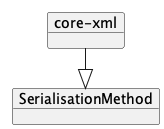
6.4.1 core.xml

CPRMV API - Generic XML Serialisation Method

subclass of: https://cprmv.open-regels.nl/0.4.3/methods/module

subclass of: SerialisationMethod

class diagram core.xml
Figure 74 class diagram core.xml
properties:
Property Type/Range Cardinality Definition
xslt 0..1 The name of the XSLT apply to transform the raw XML publication into RDF for use within the CPRMV API

7. Conformance

As well as sections marked as non-normative, all authoring guidelines, diagrams, examples, and notes in this specification are non-normative. Everything else in this specification is normative.

8. List of Figures
A. Index

A.1 Terms defined by this specification

A.2 Terms defined by reference

B. References

B.1 Informative references

[CPRMV]
Core Public Rule Management Vocabulary (CPRMV). ministerie van Binnenlandse Zaken en Koninkrijksrelaties.URL: https://standaarden.open-regels.nl/standards/cprmv/0.4.3/
[CPSV-AP]
Core Public Service Vocabulary Application ProPSV-AP). Core Public Service Vocabulary Working Group.2024-05-06. URL: https://semiceu.github.io/CPSV-AP/releases/3.2.0/
[GT4ASGA2PILOT8]
GovTech4All SGA2 WP2 Pilot 8. GRNET, ICTU, DINUM, LANTIK. URL: https://digicampus.gitlab.io/gt4a/sga2-wp8/
[RONL]
regels.overheid.nl. ministerie van Binnenlandse Zaken en Koninkrijksrelaties.URL: https://regels.overheid.nl
MinBZK - Dutch Ministry of Internal Affairs Standard - First public working draft